
Overview & Design Intent
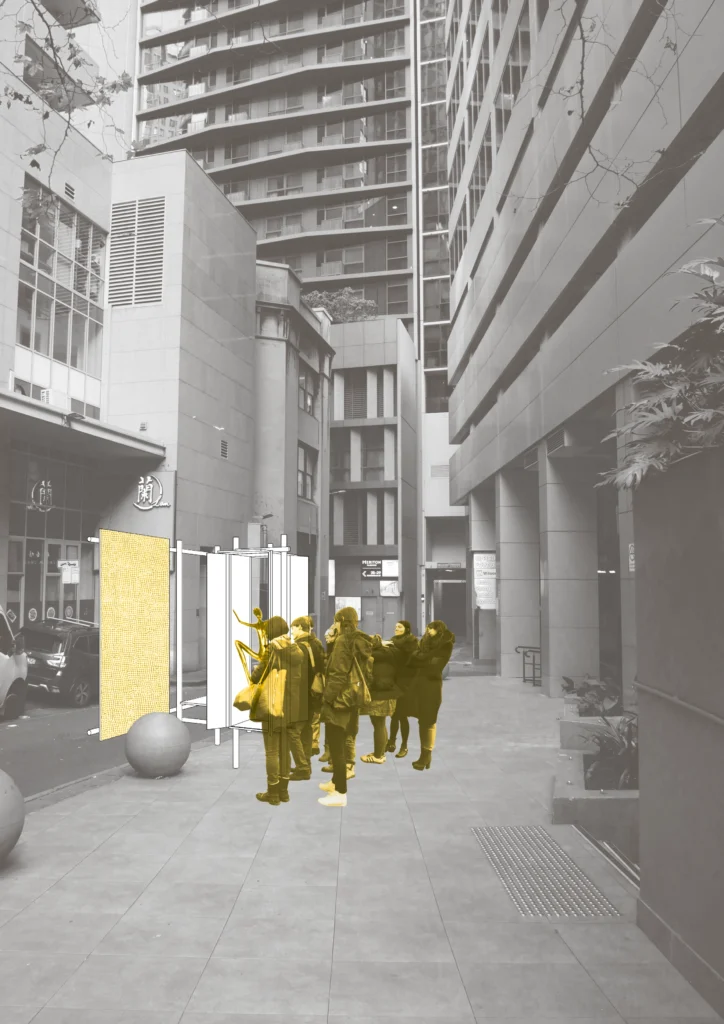
This project, Forgotten Spaces, Creative Spaces and the gestures by which this vessel of creative and cultural expression that inserts itself and sits within forgotten space, taking the form of an organising post-and-beam structure around which, creative program can be built and inserted to enable creative places where people can spend time, engage in creative discussion, understanding, and feel seen. Over time, growing from a small installation to an enclave of creative practice within Sydney CBD.


The Importance of Making
The development of the design through the creative act of physical 1:1 making is critical to understand the physical possibilities and constraints of the system in ways one just can’t visualise or think of during the process of digital creation, when one is focused on HOW one needs to work within a digital environment to make their ideas happen. As will be discussed further in this update, once conceptually simple ideas become very difficult when physically tested. The creative act and place-making within the Forgotten Spaces, Creative Places is slow, as more artists come, create space, adapt what is there, and grow. Adaptable and repeatable structures are required to facilitate changes in programs and art types.


Inspiration and Design Requirements
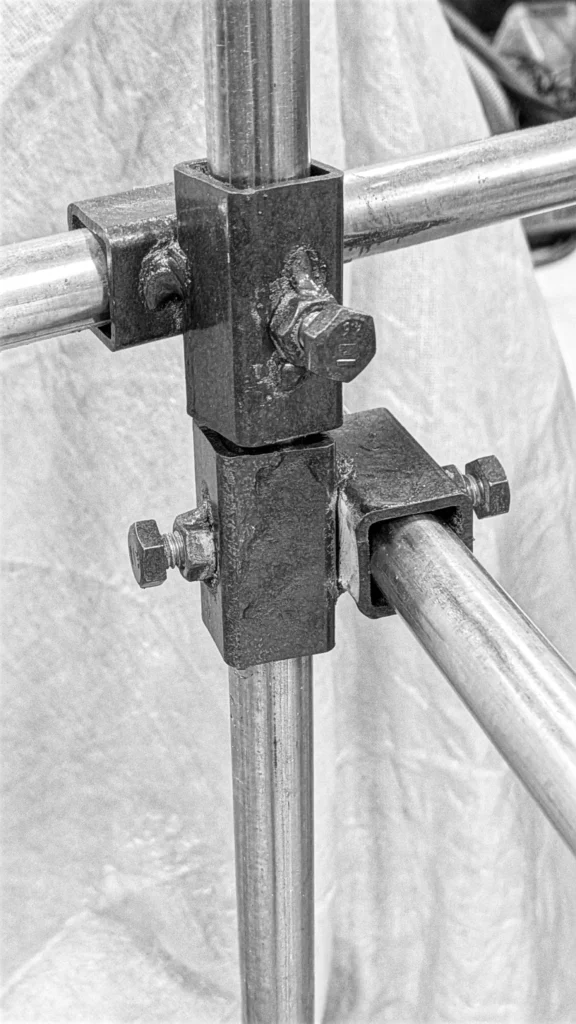
The development of the joints and framework draws inspiration from the versatility of scaffolding and projects such as Ateljé Ö’s Savannen pavilion, which employs a tubular construction with clamping joints that connect each pole.
The intent when designing and (still as of writing) developing a more refined method of joining skinny poles to various other objects, and how it holds up when a basic program is inserted.

Timber Joins
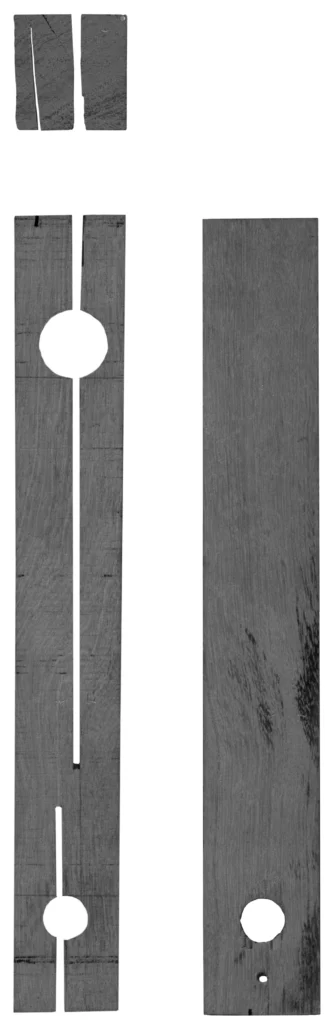
Adapting the way pegs clamp clothes on the clothesline to an architectural form was a challenge. To do so, a slit is made down the middle of a block of wood, passing through the hole where the pipe is to go, providing enough distance between the two porongs for a pipe to slide in and a bolt to clamp down on it.
The reasoning behind timber, besides it being on hand, was that various display objects or art spaces could screw into the timber element, to provide greater functionality and surface for creative practice.
On larger tests, it worked reasonably well. Issues arose when the element needed to be made smaller, which greatly reduced the pieces’ flexibility, rendering them unable to clamp anymore or to be clamped too hard, splitting the wood. On top of that, tolerance was very tight, which made it a little difficult to consistently make one without a jig. Looking back, this clamping method failed on a few fronts but was a fun experiment.


Metal Joins & Frame-Making
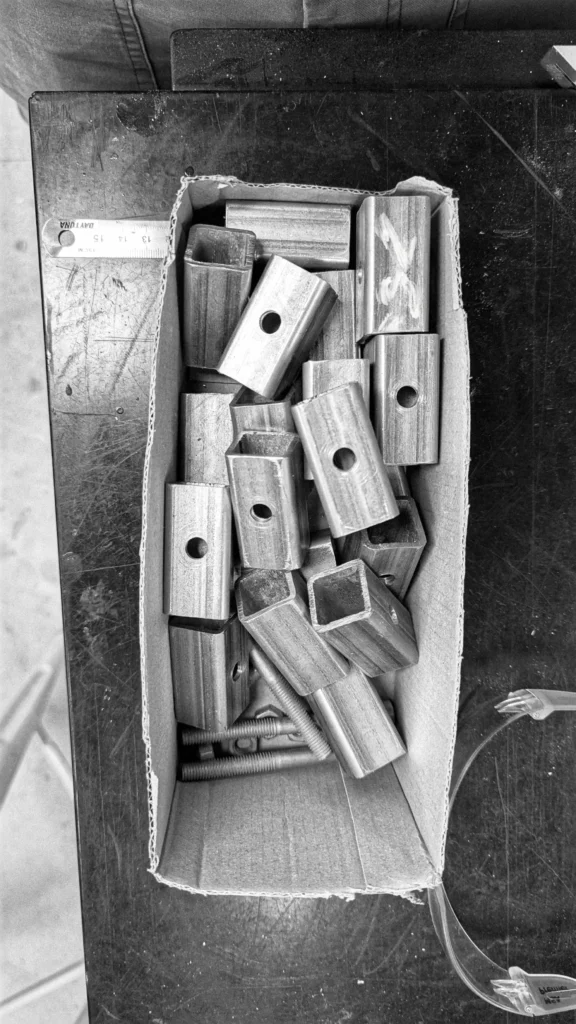
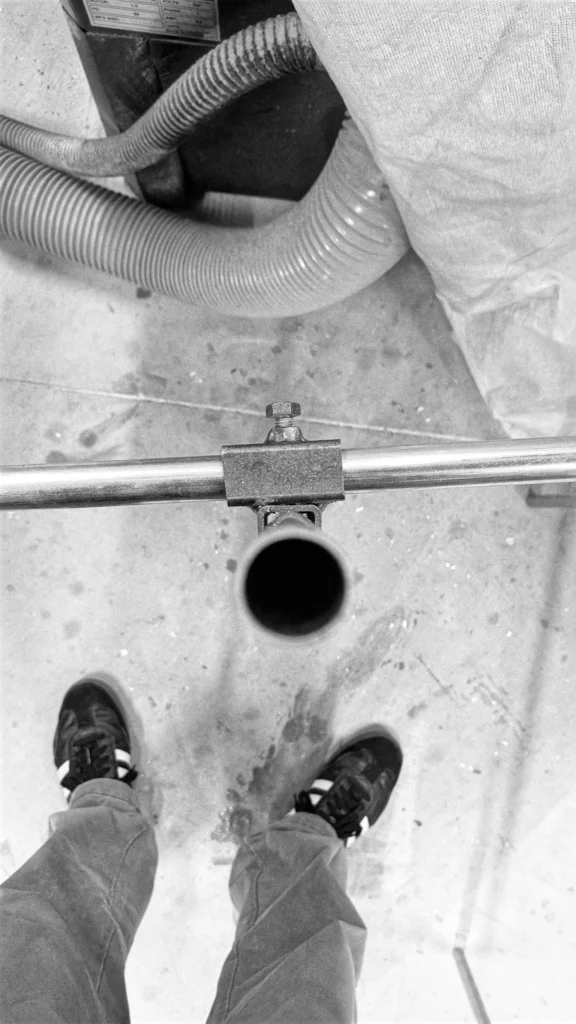
After timber, the idea was floated that I could weld square hollow sections, drill holes, and, with a welded nut, enable the poles to be easily screwed into place. Similar to scaffolding joins, but more rudimentary and suited for much skinnier pipes.
I documented this process, and as it slowly came together, I could definitely see I was onto something, or at least closer to something than I had been. Putting them together, I could see how objects could be attached to it and how, with many more, larger structures could take shape.



Further Questions
However, after all the testing, many questions remain regarding structural integrity when faced with public amenity uses, services (electricity), and larger-scale buildouts. While typing this, I have a few possible ideas; one of them being a ‘trunk and branches’ approach using these smaller poles as branches to a larger, sturdier and service-bearing trunk tubular trunk, but further testing will be needed for that.