
As I have been working on this project over the past few months, I am only now catching up to better organise and share the work via this website. While working on this project, the idea of ‘the creative act’, what it means and how through it, maintenance can create the boundaries and ownership of creative space.
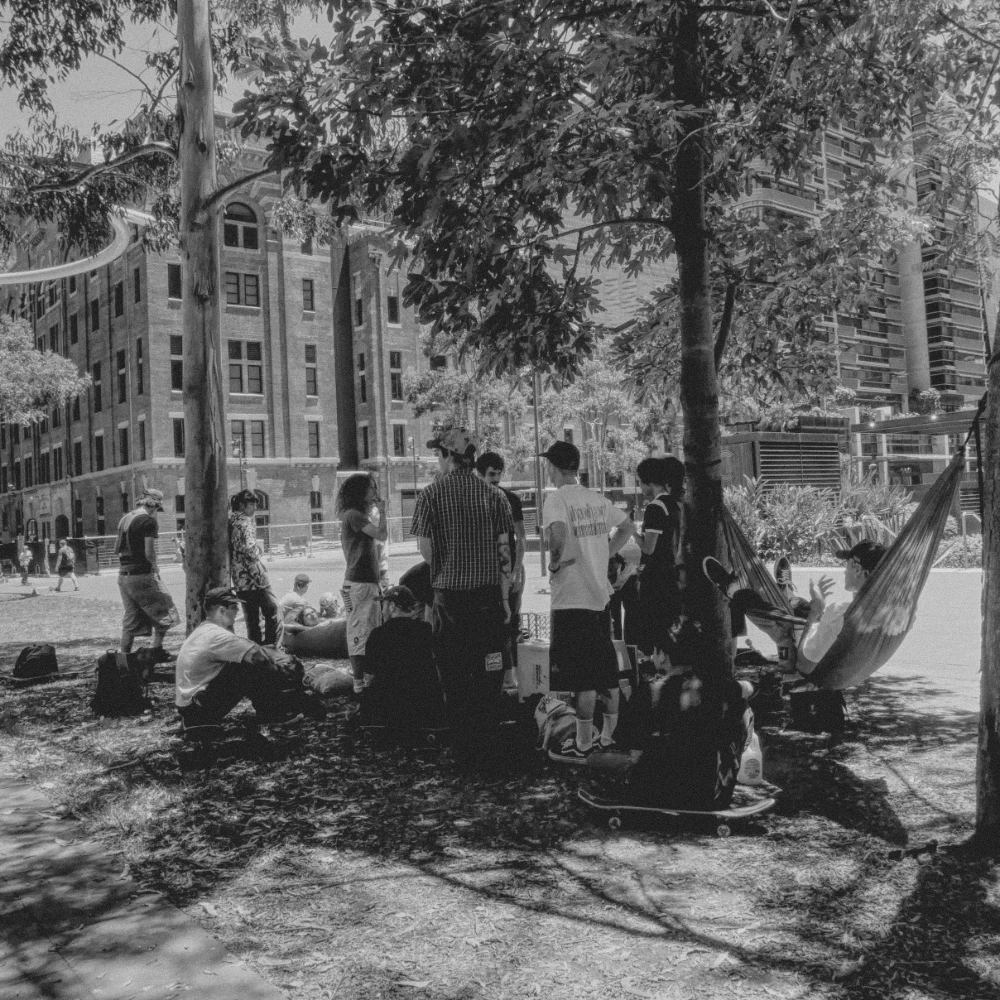
The Creative Act and Maintenance
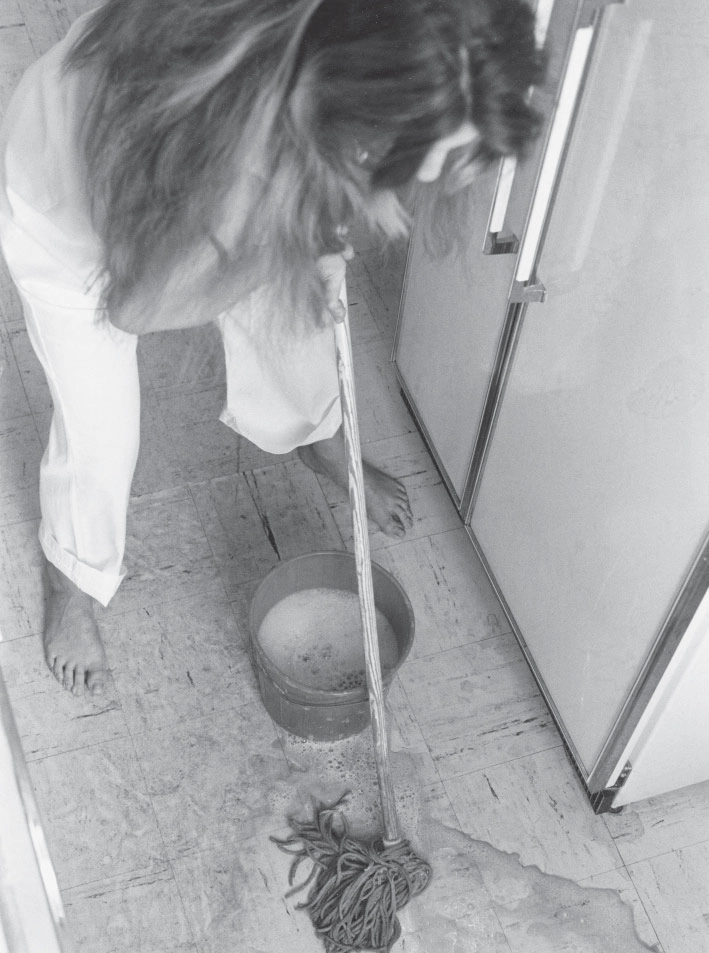
This line of inquiry doesn’t stand alone, however. This idea stands on the shoulders of performance artist Meril Laderman Ukeles through her performance titled ‘Washing, Tracks, Maintenance, 1973 (1) at the Wadsworth Atheneum museum in Hartford, Connecticut, in conjunction with her manifesto for maintence in 1969 that began it all, (link to her ‘manifesto for maintenance’, 1969 here) Herself inspired by questions of gender based roles, the tasks of women to maintain the home, nurture children and the little attention and recognition such acts receive as the tasks were assumed. (2)
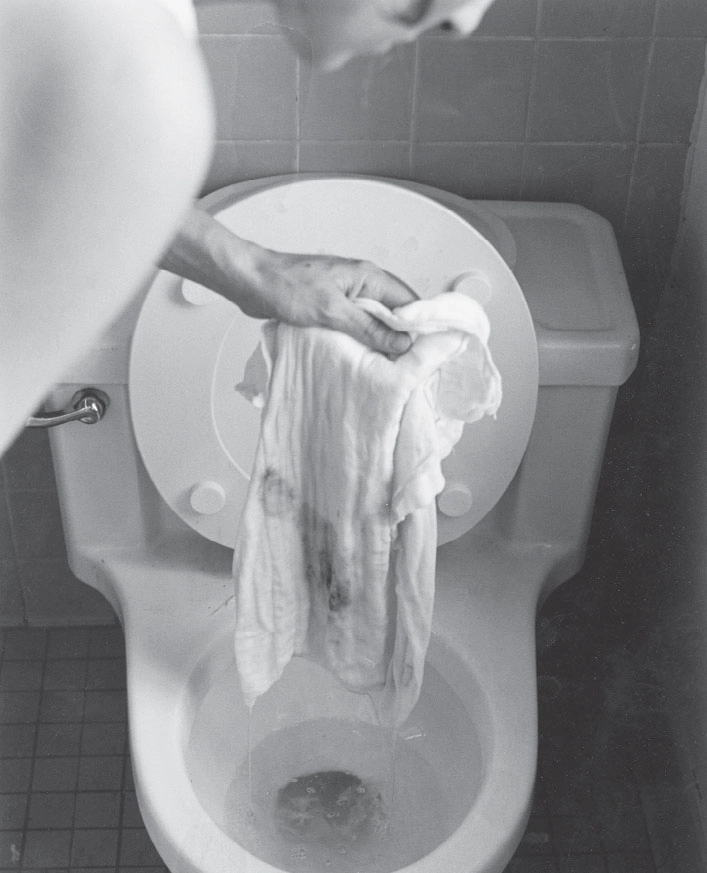
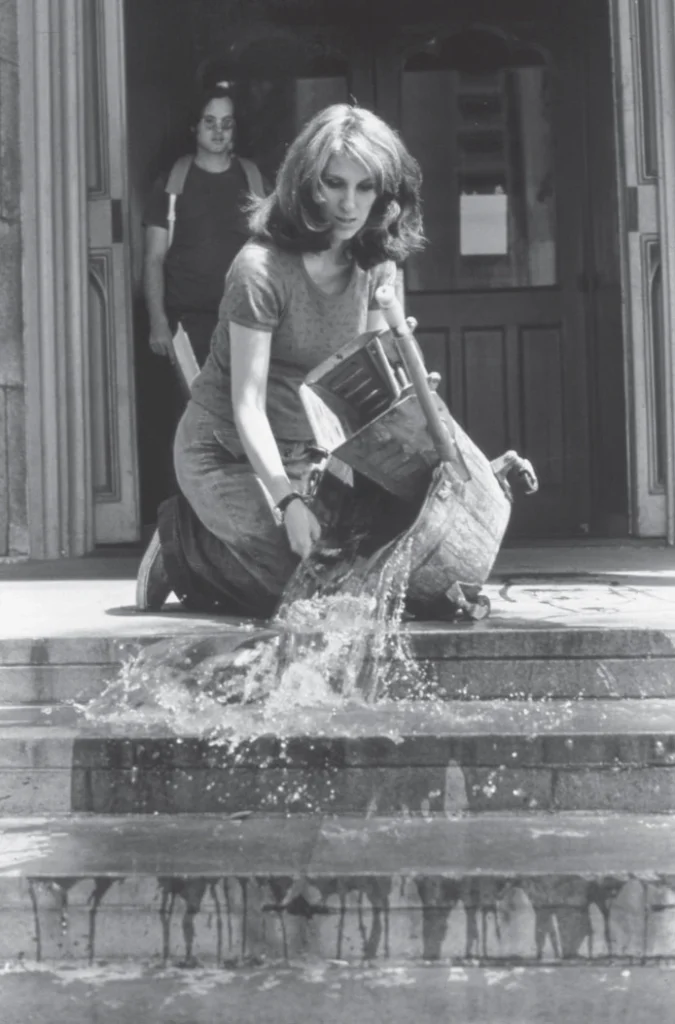
In her performance of ‘Washing, Tracks, Maintenance, 1973, Meril, through the act of public maintenance, scrubbing floors, steps and more during the day, both outside and within the gallery, brought the tasks typically done behind closed doors into public consciousness, bringing recognition to the janitorial staff who maintain the gallery. (This is quite a focused take on the performance, so if you would like to learn more, I recommend reading Maternal Care: Meril Laderman Ukeles Maintenance Art, By Andrea Lissa, here if possibe)
To bring this into a more architectural sense. Questions (of which we may not quite answer just yet) of how this creative act of maintenance translates to forms of maintained ownership in built environments?
In my own interpretation of this, as someone reading this work from an architectural point of view, concerned with ownership structures and how they are affected by one’s actions. I see through maintenance: not only is the recognition inverted, but ownership of space as well. Through this act, pace is removed from the assumed ownership of the curator or gallery owner to the janitor, via this act of maintenance, the edges of the puddles of water she uses to scrub the floors, the marks of damp left on concrete before it dries and dissapears; acting as a visible yet fleeting threshold/boundary between public or gallery space and space in the care and ownership of the janitor. Perhaps this could be translated to more permanent forms of ownership; however, the act of maintenance and the boundaries created remain integral to the creative act. But is the creative act just spatial maintenance?
Gilles Deleuze may offer some insight to this question in a talk he gave at the FEMIS (École nationale supérieure des Métiers de l’Image et du Son; “National Institute for Professional Image and Sound”), where he spoke about the question, “What is the creative act?” Within this, and perhaps along the same lines of claiming space, Deleuze spoke of the creative act as one of interesting resistance and a struggle, as most acts of resistance are. Would it be in this context of spatial care and forgotten spaces? There is a connection between repetitive maintenance as ownership and a struggle against the ways in which space is over-rationalised and creative spaces have slowly disappeared.
Country, Maintenance and Ownership
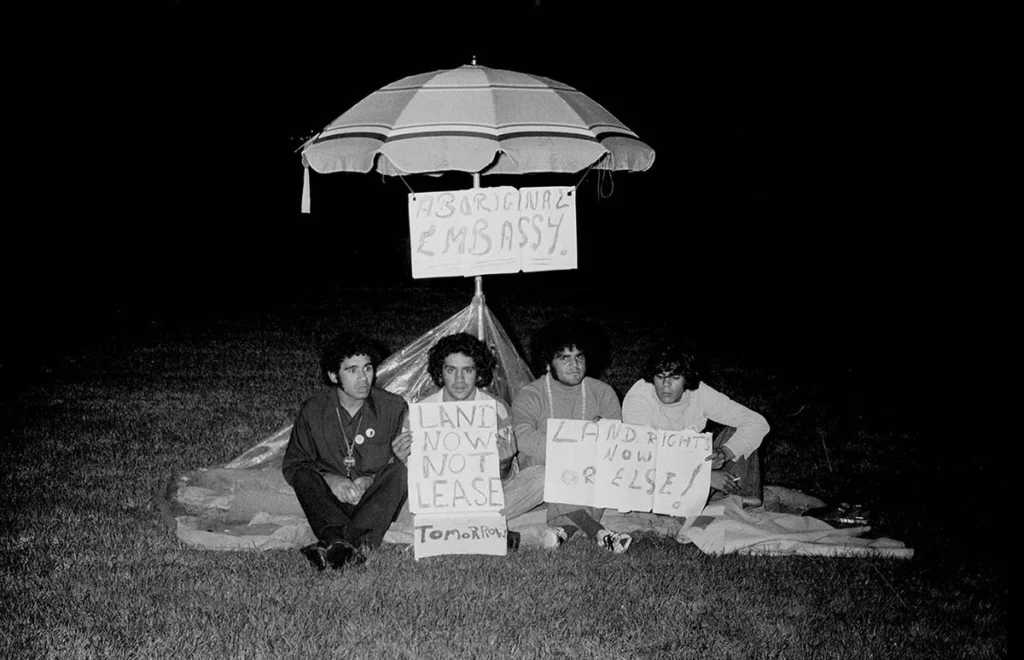
Perhaps unrelated, or loosely related. But as I write this last section of Country, spatial ownership and recognition, the thought of the Aborigional Tent Embassy in Canberra which began on 26th of January 1972 by four Aboriginal men through the very simple but hyper critical act of putting up a tent and umbrella on the lawns outside of parliament house, in response to rulings in relation to land rights (You should read more about it in depth here).
There is more that will come to mind for sure, and I can’t wait to share it with you all. As you can see, this is something quite near and dear to my heart so I want to push it as far as I possibly can and share the journey with you.