
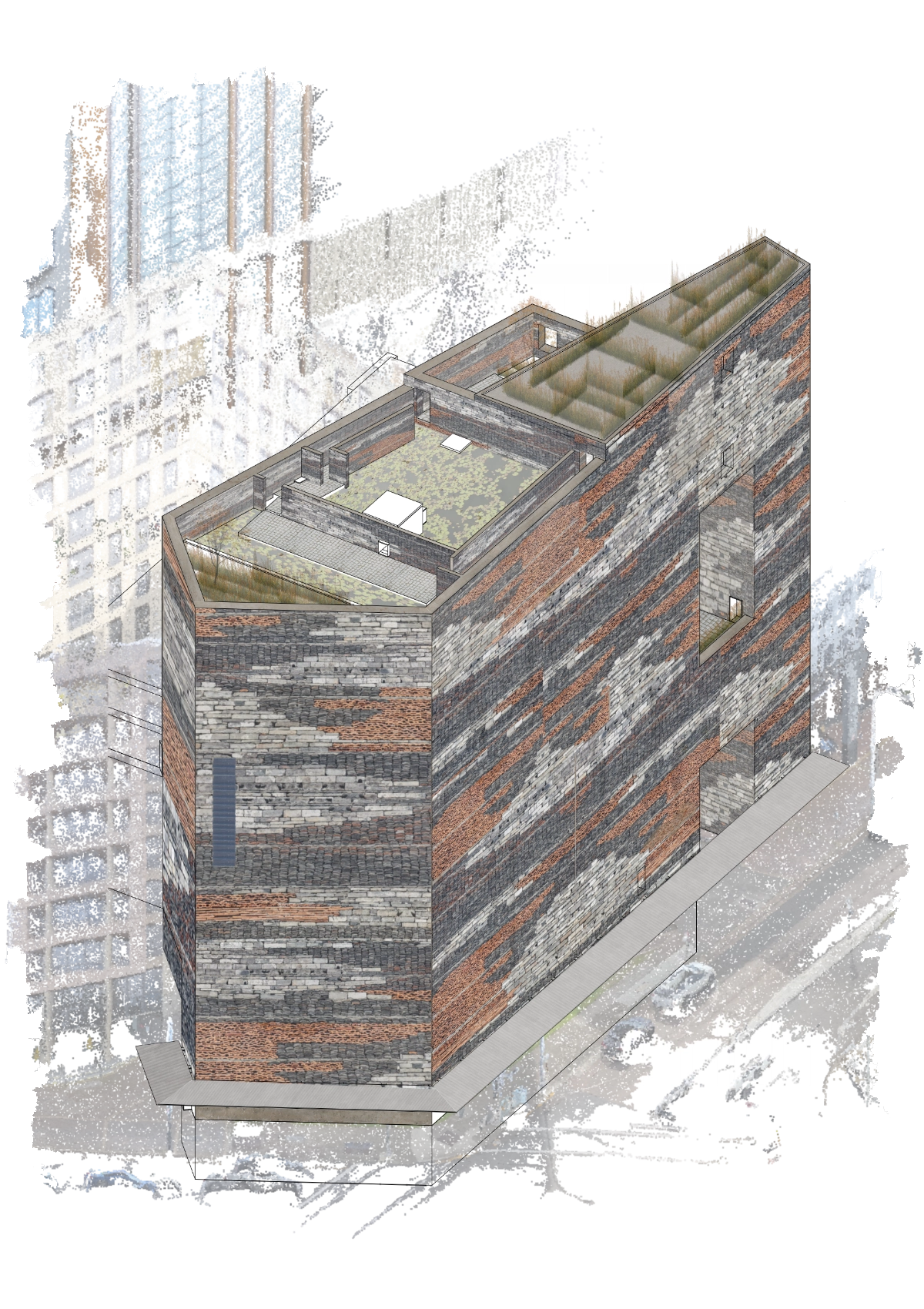
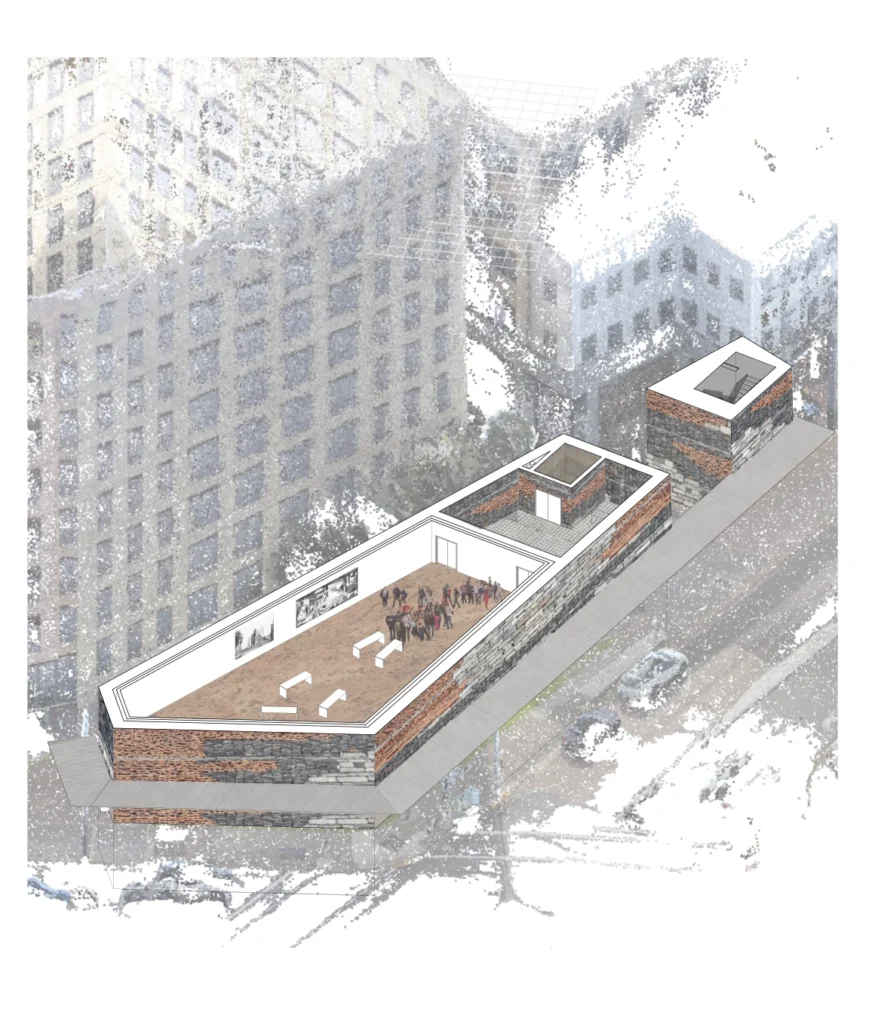
This small gallery, located along the fringe of Civic Park in Newcastle, Australia on a small sliver of land. A remnant of previous planning decisions.
The idea of using what was once considered waste serves as the project’s premise. Material collection (urban mining) and reuse with minimal processing. This can best be summed up by the Latin word spolia (to take Materials from an old structure and repurpose them for new construction). The project serves as a vehicle for developing a process for communal urban mining and construction. The form itself is secondary, shaped by material process.
Exploration & Urban Mining
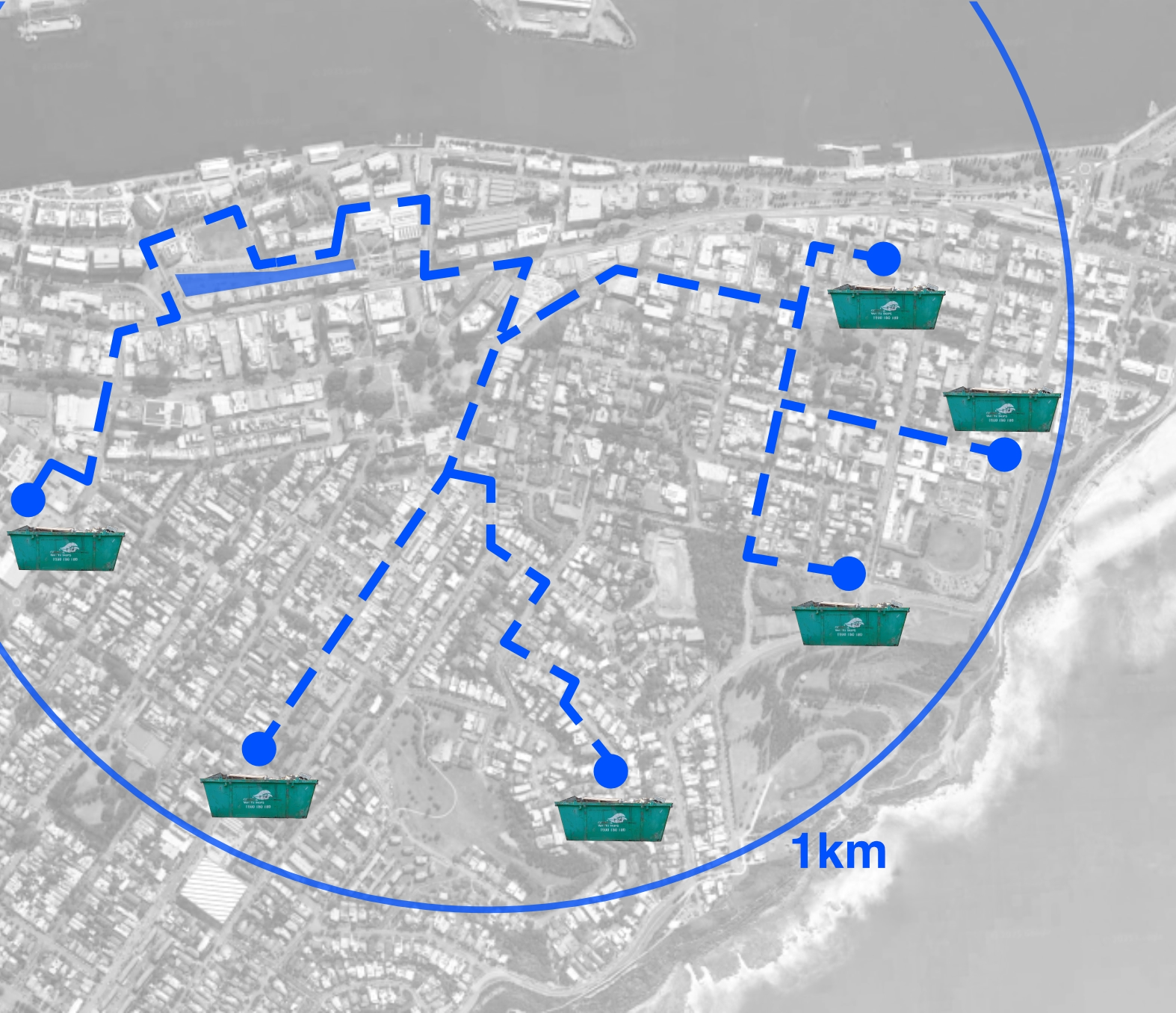
The exploration process began with photographing the existing building stock. Compiling an inventory of architectural elements that could be used throughout the gallery within a 1km radius of the site.
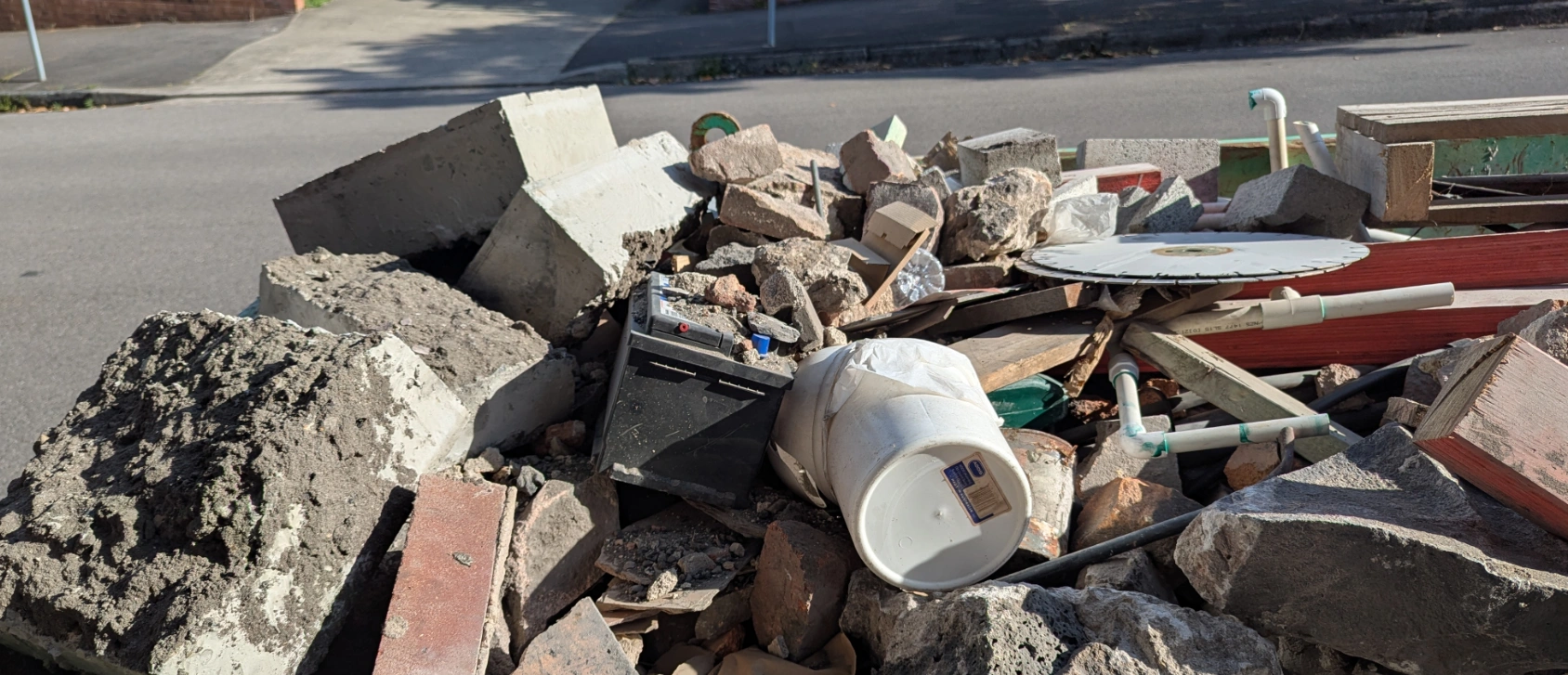
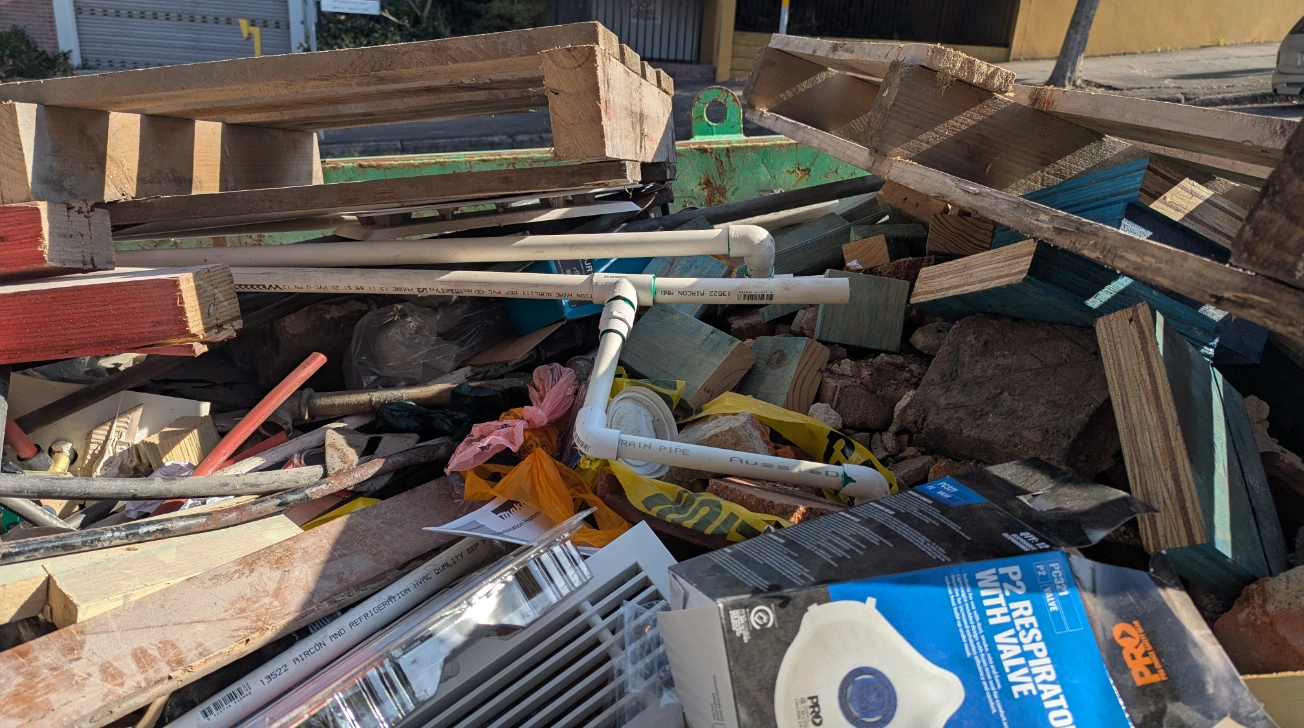
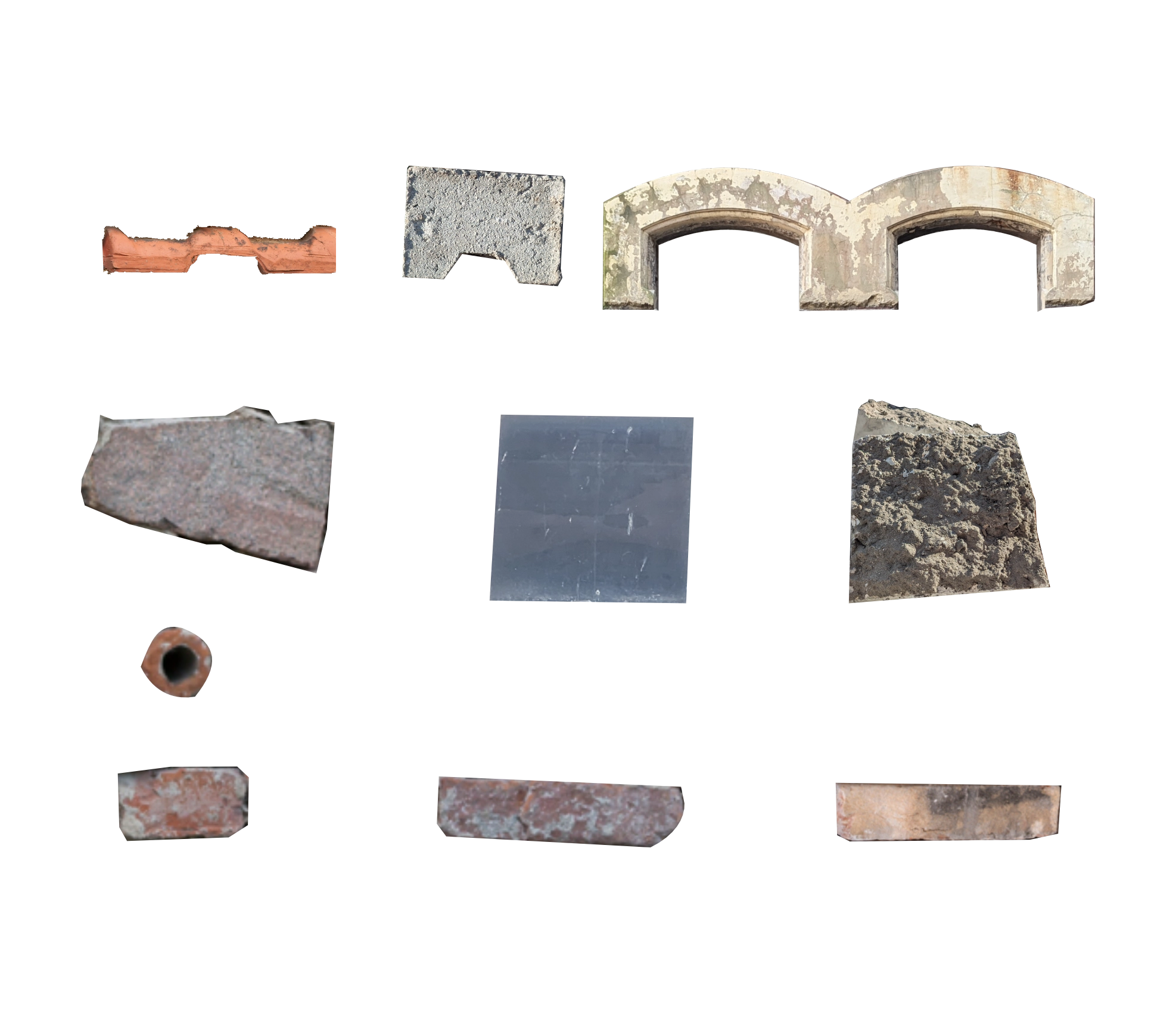
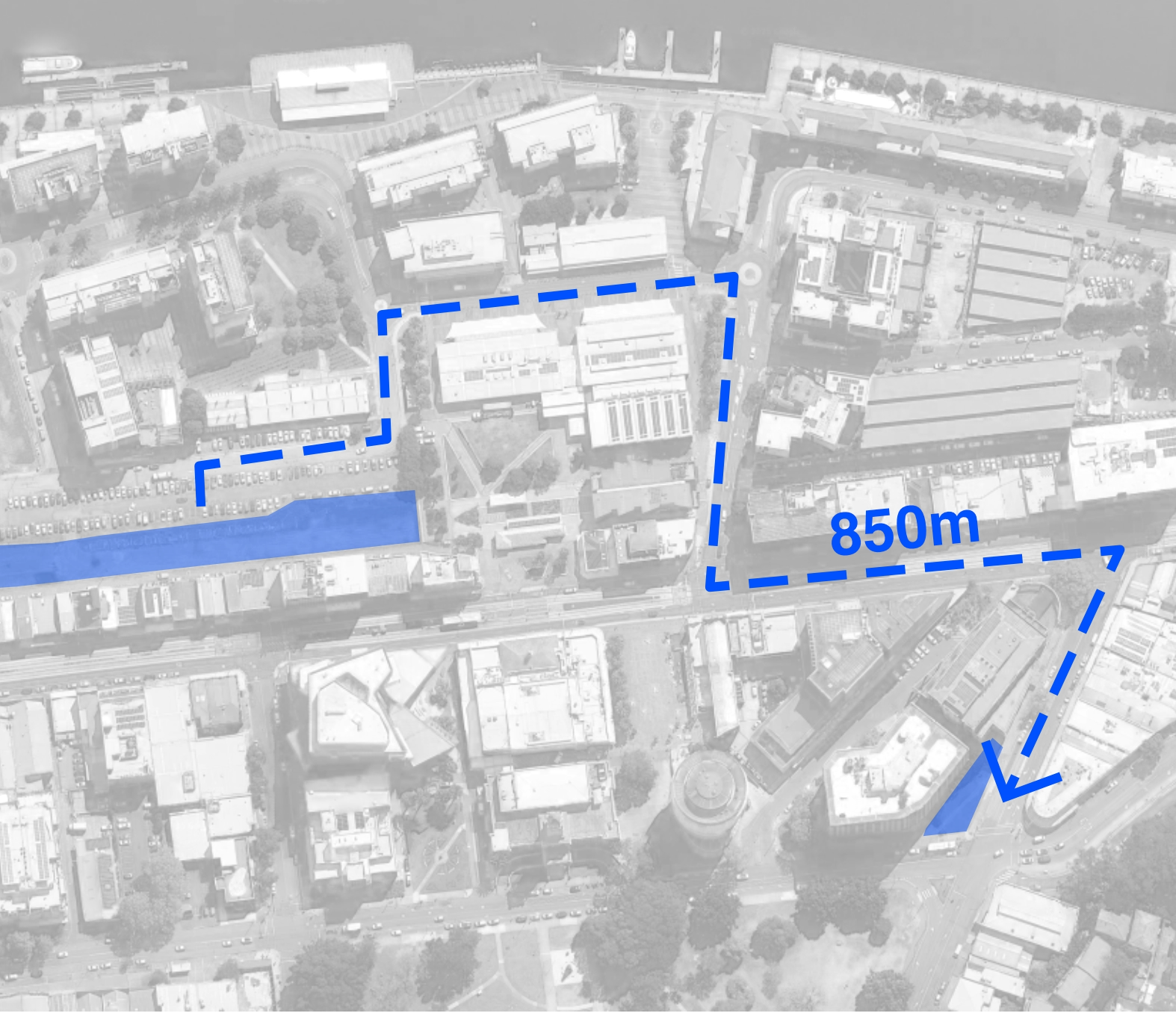
Within a 1 km radius, various communal construction waste skip bins can be set up to collect construction waste and be collected over the course of the gallery’s construction. ‘Mining’ local resources, we reduce carbon emissions embodied within transport. Keeping transport emissions low is key, as a single kilometre in a Light Commercial Vehicle can emit 307g of CO2 per Km. With waste being sorted and stored on empty land, behind shop-top housing, 850m from the construction site.
Building Social Activities, Walls
& Urban Ecologies
The collection of waste can be transformed into a greater social activity, gathering resources or ‘mining’ the demolished Newcastle urban environment. Turning the construction of the gallery into a communal resource stream. Through this, we are cementing pieces of the community, both physically and metaphorically, within the gallery. Through methods similar to those of Frank Lloyd Wright’s Taliesin.
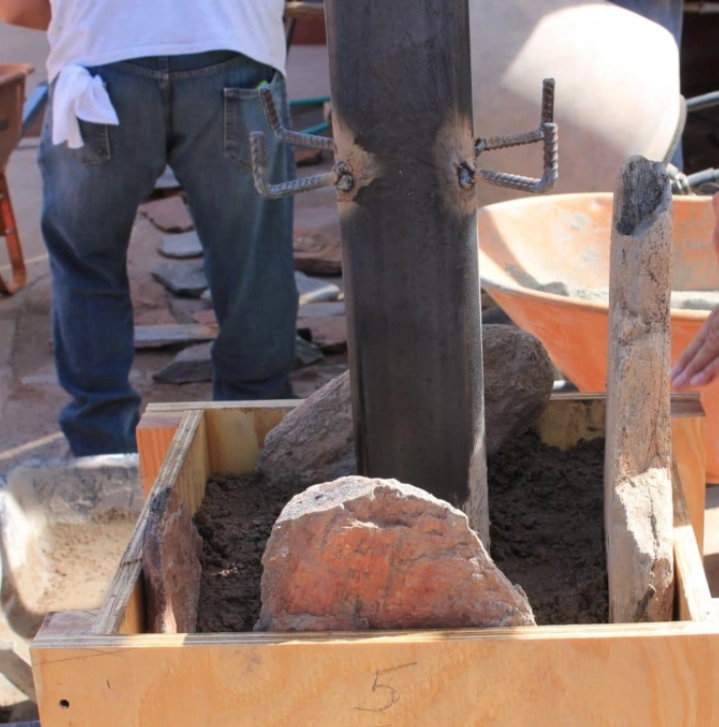
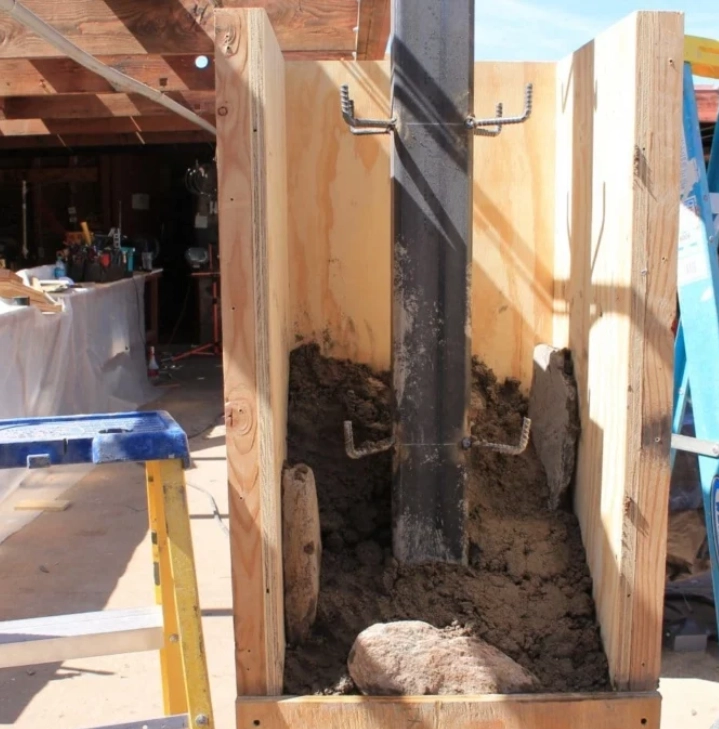
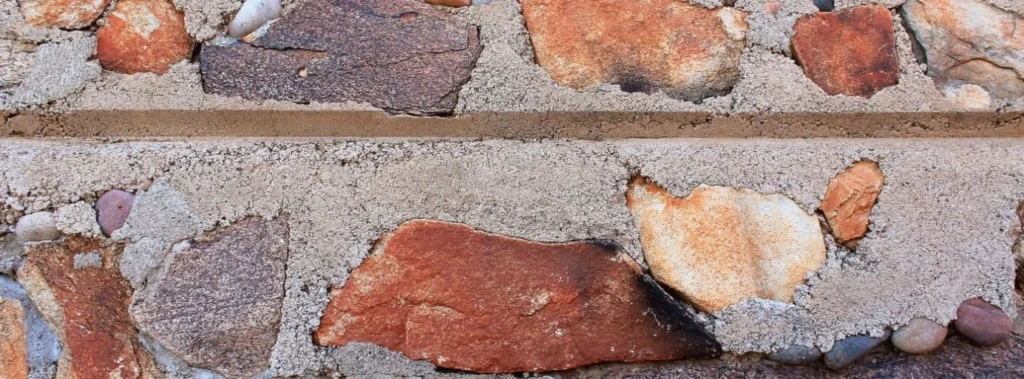
Photo Credit
Foundation, T. F. L. W. (2017). Desert Masonry. In.
https://franklloydwright.org/rebuilding-desert-masonry/
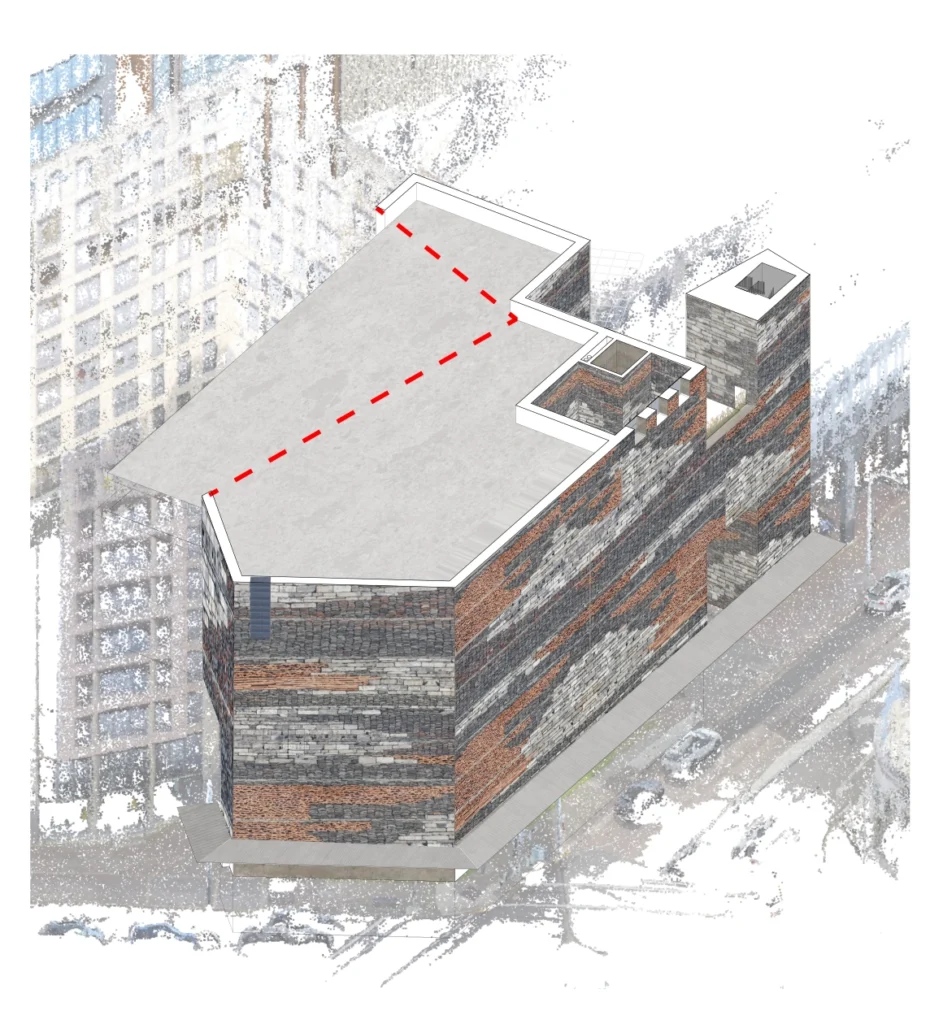
Researching the construction of Taliesin’s walls in greater depth, desert stones are used and placed, with layers of “a very dry mix of Portland cement and coarse sand”. By employing a similarly dry mix and using the mined resources, small pockets and gaps form between pieces. This results in a rough surface suitable for plant growth. Built by the community and tradespeople layer by layer.
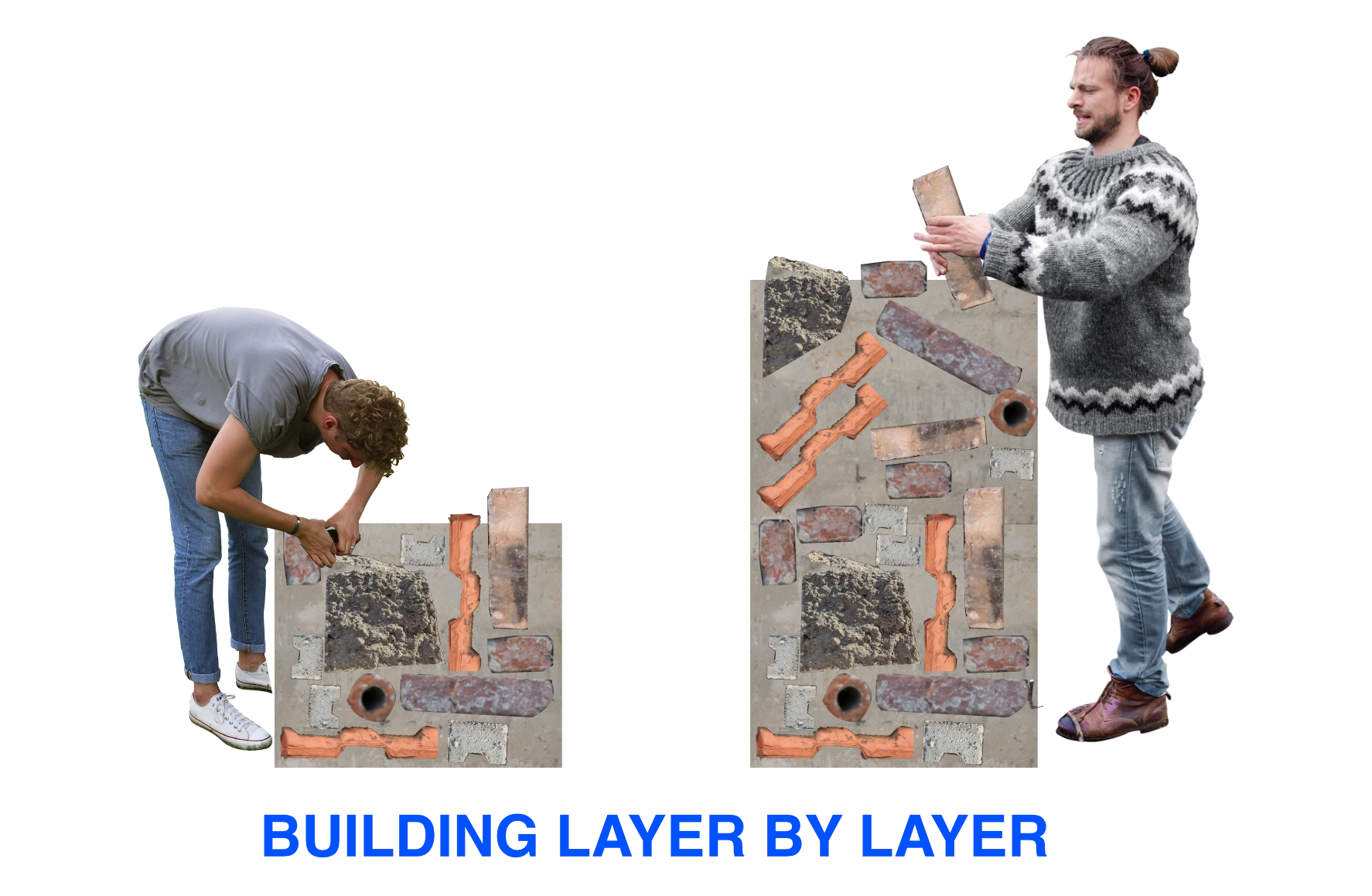
Aesthetically, the use of materials collected yields a visual ledger of which buildings were demolished and which materials were available.
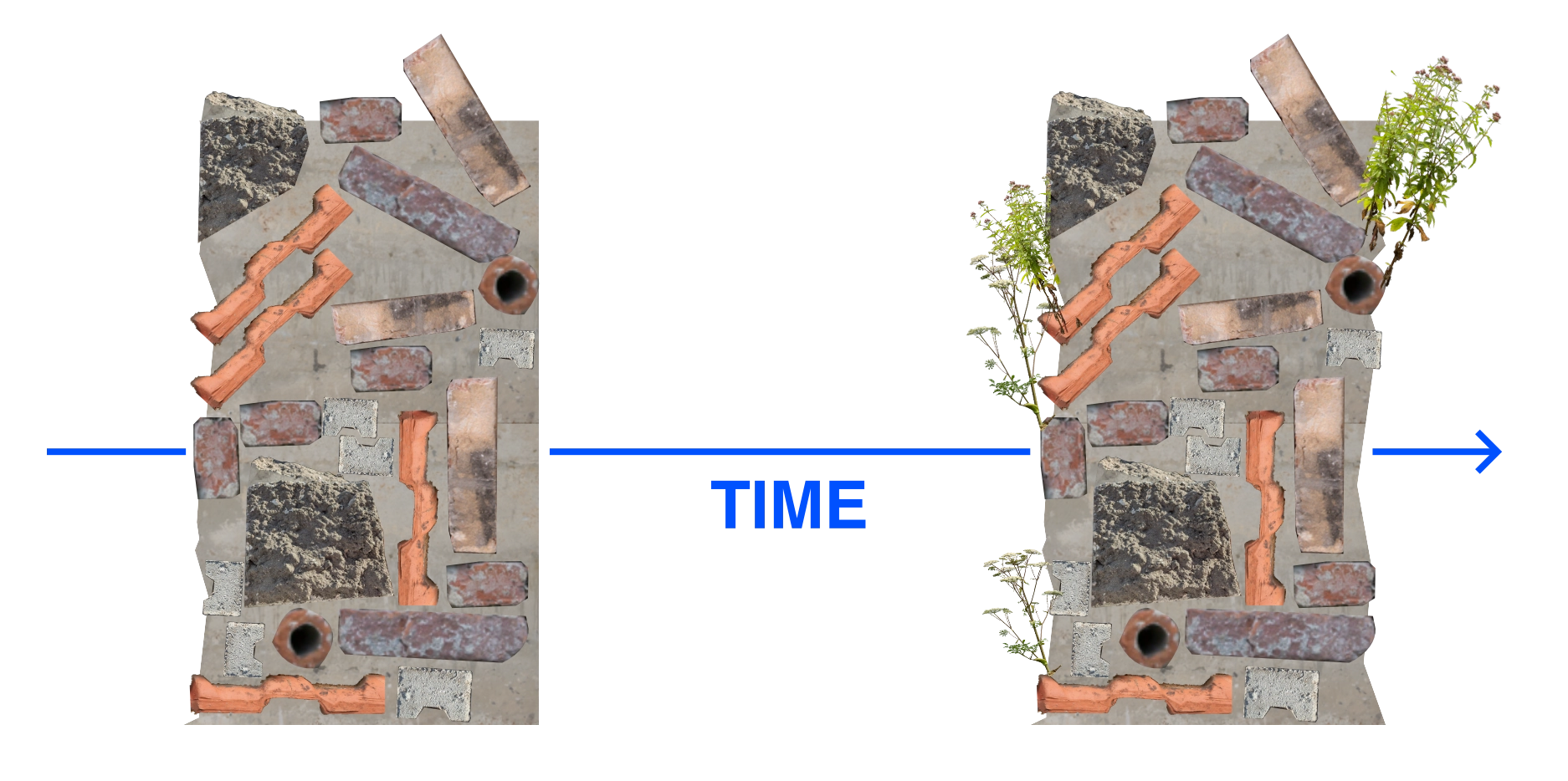
When given time and weathering, the smaller and larger recycled aggregates are exposed. Because of this, dirt is trapped, creating prime locations for plant and leichin growth. I am of the mind that architecture shouldn’t force nature; make room for it with suitable conditions, and it will come.
Out of The Ground
As previously stated, the collection and construction of the gallery is a
communal effort, pushing the gallery beyond a simple space for art to a communal landmark, and a reminder of the vast amounts of waste generated by the construction industry.
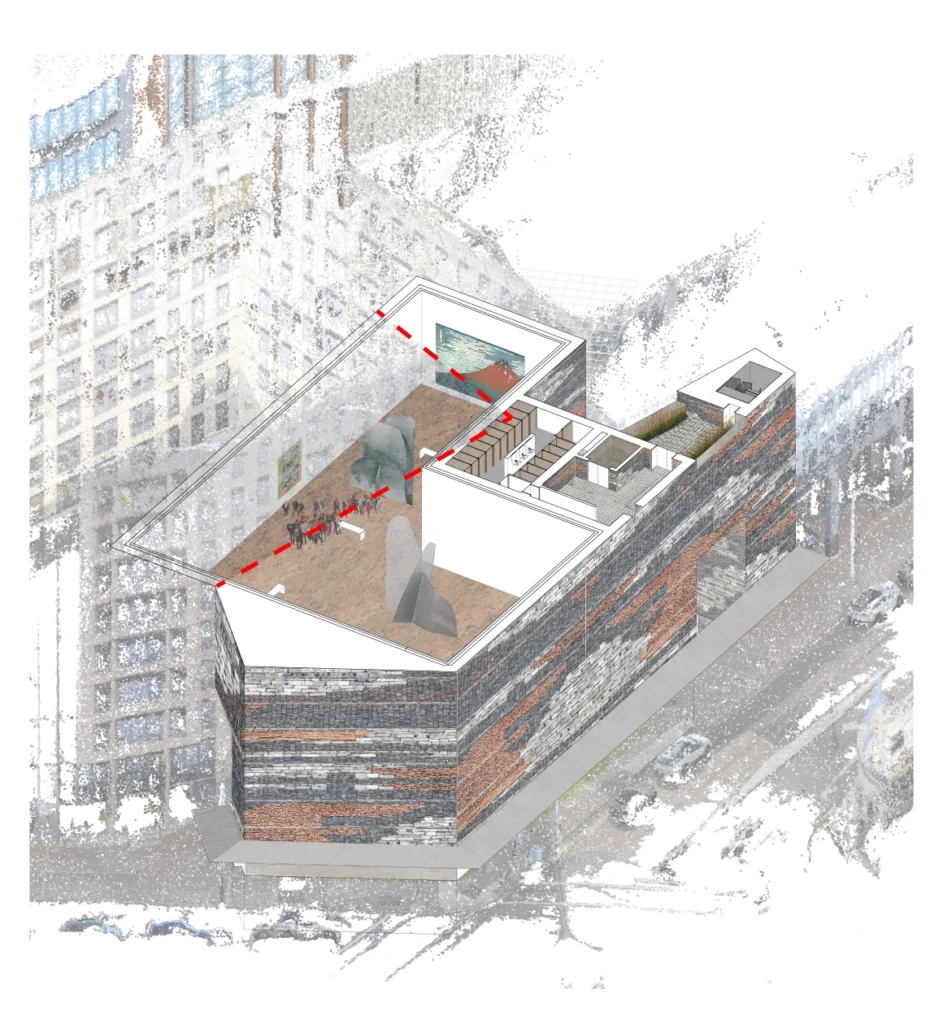
As the form rises from the ground and given the facade’s porous nature, controlled spaces for art must be created. During construction, Insulated boxes will be inserted into the spaces, allowing for energy-intensive granular temperature and humidity control only where it is required. This blank internal space also allows curators to change them as they wish, adapting them to other uses if needed.
Trading
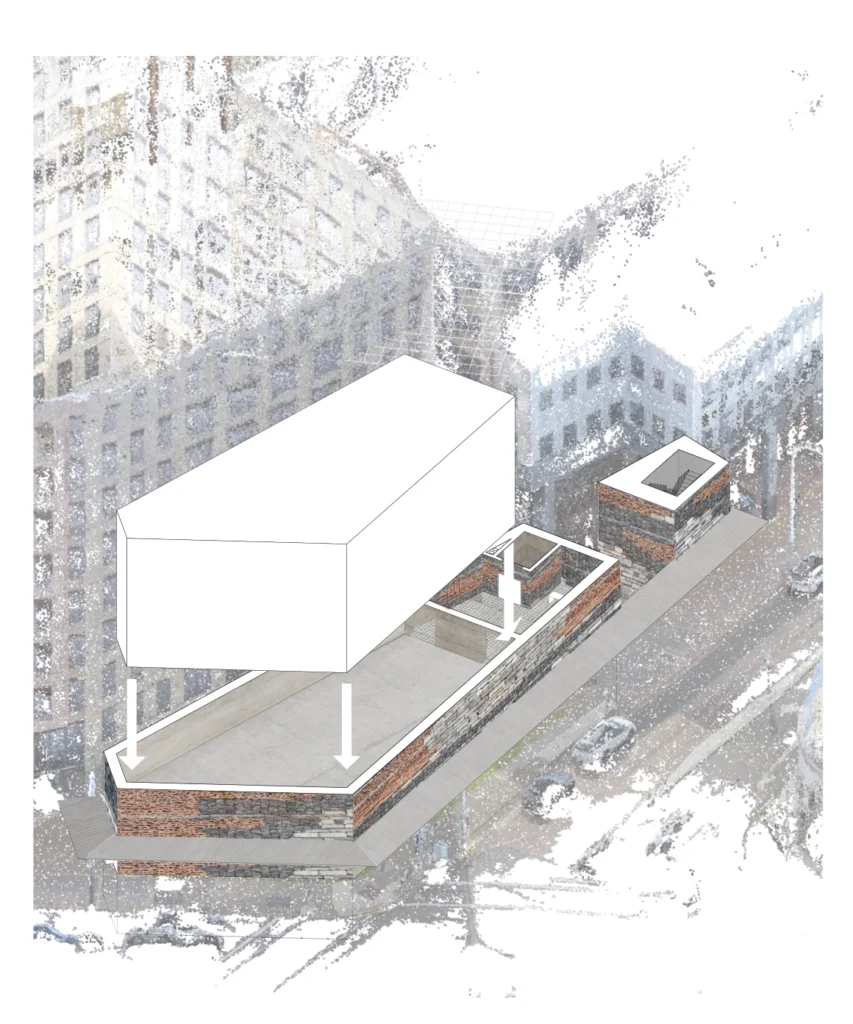
In exchange for a larger, more uniform square XL gallery space, the gallery exchanges spaces with the neighbouring office building. Absorbing its spatial and material resources for use within the gallery, with the three floors being returned to the office. The bridge between the buildings creates a covered walkway as an added bonus.
Water Reuse & Aquatic Ecologies
On the roof, a lake with provisions for planting is installed on the roof, collecting rainwater and providing a space for aquatic ecologies. Using non-contaminated topsoil for shallow and deep planting along the roof creates a protected area for birds and insects to live. This, paired with the crevices in the facade, further opens the door for urban ecologies to form.
More Work To Be Done
More must be done to work towards urban mining and material reuse. Magni Studio aims to explore further through the development of material experiments and built projects. Embedding the stories of past uses and incorporating them into new contexts.